The Child by Munsi Premchand
The Life of Munshi Premchand
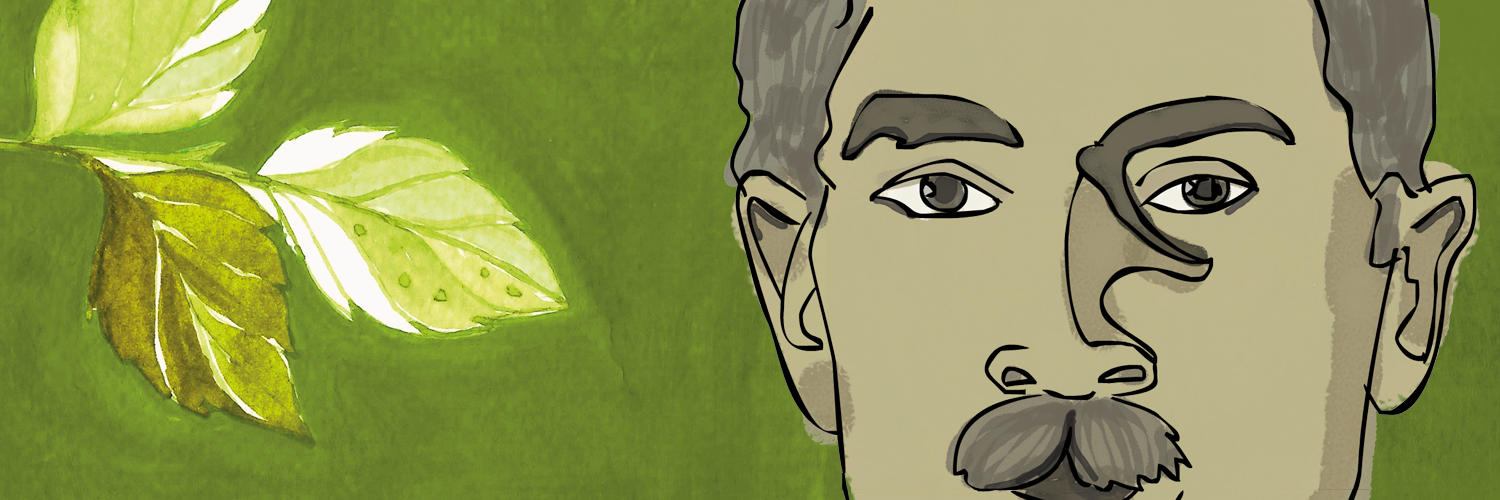
Munshi Premchand is regarded as one of the most important writers of Hindi-Urdu canon. His prolific style of writing widely contributed towards the shaping of the genre of short stories in India. Writing these short stories, Premchand used this opportunity to critique social issues such as moral bankruptcy, the plight of women, caste injustices, blind faith, patriarchy and many more.
Premchand was born of Kayastha parents in a village called Lamahi, on the outskirts of Benaras. His mother passed away when he was eight years old and his father, a postal clerk, remarried soon after. He first went to school in Gorakhpur where his father was posted. Born Dhanpat Rai Shrivastav, Premchand was fondly called Nawab and published his early writings under the name ‘Nawab Rai’.
After passing his class 10 examinations in 1898, Premchand began a long career as a teacher and school administrator, during which he passed as a non-formal candidate in the class 12 examination. This was in 1916. Three years later, he did a BA with English literature, Persian and history as his subjects.
He published his first collection of five short stories in 1908 in a book called Soz-e Watan. The stories were all patriotic and the British government interpreted these as seditious. He had to appear before the district magistrate who told him to burn all copies and never write anything like it again. This incident gave birth to the new pen name Premchand. It was only the first of Premchand’s many brushes with authority though and he was required to deposit a security of Rs 1000 many times in the 1930’s.
Indian history and mythology, Indo-Muslim cultural history, contemporary society and his own wide readings of literature from across the world influenced Premchand’s work. He was the first Hindi and Urdu to writer to write in depth of the lives of the deprived sections of society. As a rule, he wrote on contemporary themes of immediate social and political relevance, after experimenting with a few short stories set in the historical past. His work became a vehicle for his socially engaged agenda of social reform.
In 1918, Gandhi had declared Hindi to be the national language and Premchand had, between 1915 and 1924 begun to write in Hindi instead of Urdu.In 1921 he resigned government service at the call of Gandhi during the Non-Cooperation Movement. He bought a press in 1923 and started the publishing house Saraswati Press. Due to low income, he also worked as the editor of the Hindi journal Madhuri in Lucknow in 1924-25 and again from 1927-32. In 1930 he started a journal called Hans and two years later, took over another journal called Jagaran.
Premchand died on 8 October 1936, at the age of fifty-six. He had returned to Benares four years before, and lived in Lamahi in a bigger pukka house that he had built, which still stands. He had written what are now reckoned to be close to 300 short stories and published thirteen novels, including one left unfinished. At least four of his novels, Sevasadan, Rangbhumi, Karmabhumi, and Godaan are considered among the greatest written in Hindi.


Comments
Post a Comment